





Expert Physiotherapy Advice from Burton Physio Group and Burton Physio Group Derby
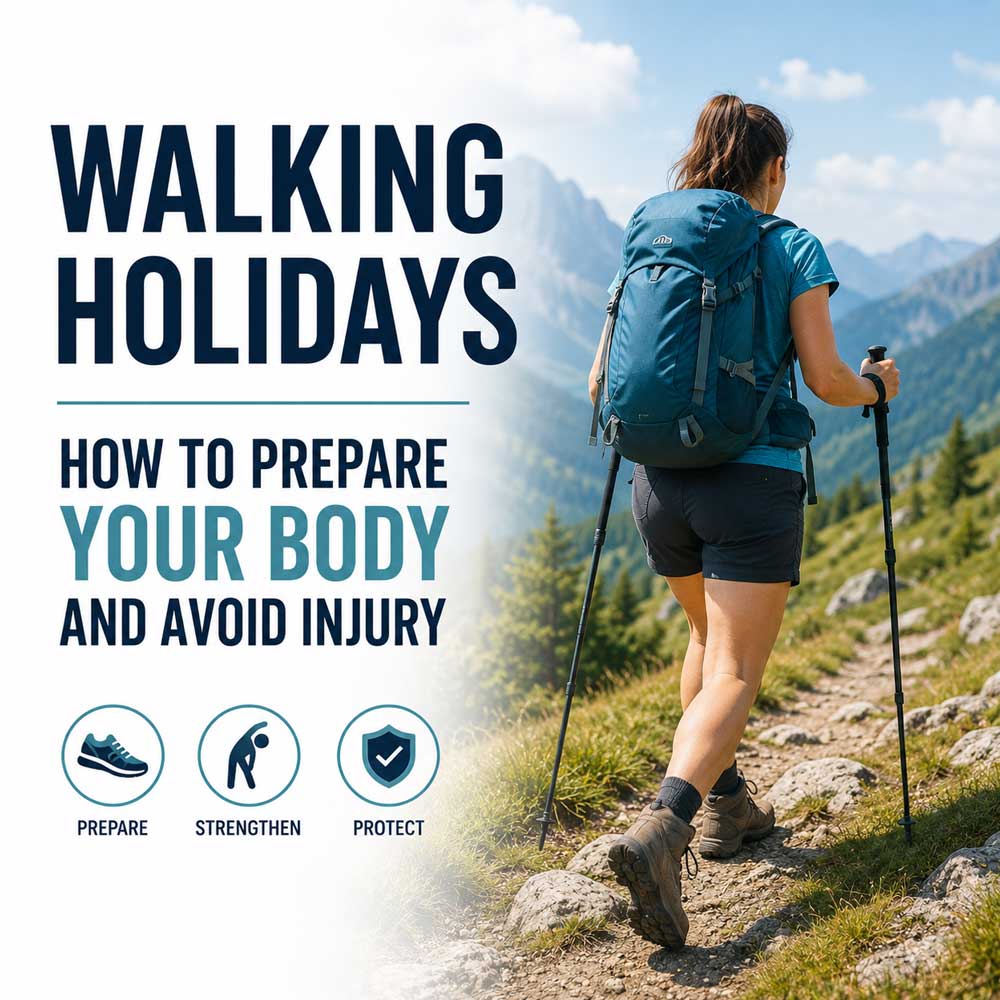
At Burton Physio Group and Burton Physio Group Derby, we regularly help patients prepare for and recover from walking holidays and extended periods of physical activity. Walking holidays are a fantastic way to stay active, explore the outdoors and support overall health and wellbeing. While they are often considered low-impact, the combination of long daily distances, uneven terrain and consecutive days of walking can place significant stress on the body and increase the risk of injury without proper preparation.
With the right physiotherapy-informed guidance and preparation, you can reduce the likelihood of pain or injury and enjoy your walking holiday with confidence.
Why walking holidays can cause pain or injury
Even physically active individuals can experience overload during walking holidays. The increased demand often comes from:
- Walking longer distances than usual
- Spending several hours on your feet daily
- Uneven terrain, hills, steps, and descents
- Carrying a rucksack for extended periods
- Limited recovery time between walking days
These factors increase load through the feet, ankles, knees, hips, and lower back.
Common walking holiday injuries seen in physiotherapy clinics
At Burton Physio Group, we frequently see patients after walking holidays presenting with:
- Foot pain
- Knee pain, especially on downhill sections
- Achilles tendon and calf tightness
- Hip and lower back discomfort
- General muscle soreness that does not settle
While many of these issues are not serious, they can significantly affect mobility and enjoyment of your trip.
How to prepare your body before a walking holiday
A structured training programme is not always necessary, but gradual preparation can greatly reduce injury risk.
Build walking tolerance gradually
Increase your walking distance over several weeks before your holiday. Include at least one longer walk per week to prepare your body for sustained activity.
Train on varied terrain
Walking on hills, uneven paths and different surfaces helps condition stabilising muscles around the ankles, knees and hips.
Strengthen key muscle groups
Simple strength exercises 2–3 times per week can support joint health and endurance:
- Calf muscles
- Quadriceps (thighs)
- Gluteal muscles (hips and buttocks)
- Core muscles
These areas are essential for balance, posture and shock absorption during walking.
Choosing the right footwear for walking holidays
Footwear plays a major role in preventing walking-related injuries and discomfort.
Good walking shoes or boots should be:
- Comfortable from the start (no painful “breaking in”)
- Supportive on uneven terrain
- In good condition with adequate tread
- Appropriate for the environment and distance
Wear them on several shorter walks before your trip to reduce blister risk and improve adaptation.
Rucksack and load management
Carrying excess weight can increase strain on the lower back, hips and knees.
To reduce injury risk:
- Pack light and only essential items
- Distribute weight evenly
- Use padded, well-fitted shoulder straps
- Avoid unnecessary load where possible
Load management is a key principle used in sports injury prevention and physiotherapy treatment.
How to avoid injury during your walking holiday
Mild soreness is normal, but early symptoms should not be ignored.
If you notice discomfort such as aching feet, tight calves, or knee pain on descents:
- Reduce walking distance for the day
- Slow your pace
- Take more frequent breaks
- Split longer routes into shorter sections
- Use walking poles to reduce knee load
- Address symptoms early before they worsen
Small adjustments often prevent minor issues developing into longer-term injuries.
Blister prevention tips
Blisters are one of the most common walking holiday problems.
To reduce risk:
- Wear moisture-wicking socks
- Change socks if damp
- Ensure correct shoe fit
- Use blister plasters or tape at early signs of rubbing
When to seek physiotherapy advice
If pain continues after your walking holiday or begins to affect normal daily walking, it is advisable to seek professional assessment.
Our physiotherapists can help to identify:
- Soft tissue overload
- Joint irritation
- Movement or biomechanics issues
- Tendon or muscle strain
Early physiotherapy intervention can significantly speed up recovery and prevent recurrence.
Key takeaway messages
- Walking holidays place higher physical demand than many people expect
- Gradual walking preparation reduces injury risk
- Footwear quality is one of the most important factors in prevention
- Carrying less weight reduces strain on joints and muscles
- Early symptoms should be managed by adjusting activity, not pushing through
- Downhill walking often places the greatest load on the knees
- Blister prevention is essential for comfort and mobility
- Persistent pain after activity should be assessed by a physiotherapist
