





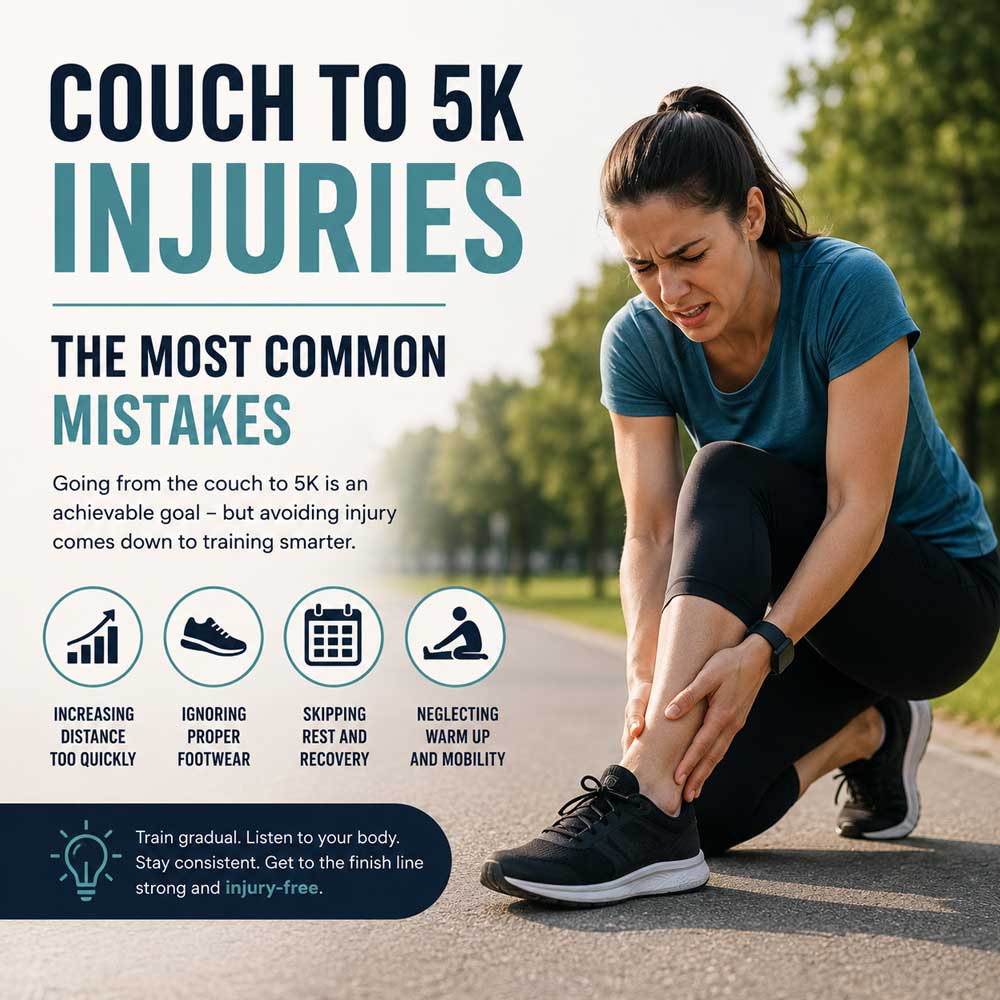
Expert Running Injury Advice from Burton Physio Group and Burton Physio Group Derby
The Couch to 5K programme is one of the most popular beginner running plans in the UK, especially for people looking to improve fitness, support weight management, or return to exercise after a break. At Burton Physio Group and Burton Physio Group Derby, we regularly see patients who begin Couch to 5K with great motivation but develop avoidable running injuries due to training errors rather than the programme itself.
While Couch to 5K is carefully structured to build running tolerance gradually, injuries often occur when the plan is progressed too quickly or combined with poor recovery, footwear or pacing strategies. Understanding these common mistakes can significantly reduce injury risk and help you stay consistent.
Why Couch to 5K injuries happen
Most running-related injuries during Couch to 5K are caused by load errors — when the body is asked to do more than it is adapted for.
Common contributing factors include:
- Sudden increases in running volume
- Poor recovery between sessions
- Incorrect pacing
- Inadequate footwear
- Ignoring early pain signals
These factors place repeated stress on the calves, shins, knees, feet and hips.
Mistake 1: Doing too much outside the plan
One of the most common errors we see in physiotherapy practice is adding extra running sessions on top of Couch to 5K.
Even though the programme feels manageable, adding additional runs or skipping rest days can overload tissues that are still adapting, particularly:
- Calf muscles
- Shin muscles
- Knees
- Achilles tendon
The programme is designed with progressive loading principles, allowing bones, tendons and muscles to adapt safely over time.
Mistake 2: Ignoring early warning signs of injury
Early symptoms are often subtle, but they are important indicators of overload.
Warning signs include:
- Pain that increases during a run
- Changes in running technique due to discomfort
- Symptoms that persist or worsen the following day
- Localised pain in the shin, heel, knee or Achilles tendon
Ignoring these symptoms and continuing to run is a common reason minor irritation develops into longer-term running injuries.
Mistake 3: Skipping warm-ups and cool-downs
Although Couch to 5K includes walk-run intervals, many beginners still start sessions without proper preparation.
A short dynamic warm-up helps:
- Increase blood flow
- Activate muscles and tendons
- Prepare joints for impact
Similarly, a cool-down walk helps gradually reduce heart rate and muscle tension.
While not the sole cause of injury, skipping these steps can contribute to stiffness and overload over time.
Mistake 4: Wearing unsuitable running shoes
Footwear plays a major role in running injury prevention.
Running in worn-out or inappropriate shoes can increase stress on the:
- Feet
- Ankles
- Shins
- Knees
Good beginner running shoes should:
- Feel comfortable from the start
- Provide adequate cushioning
- Not be excessively worn or compressed
- Be suitable for repeated running impact
Specialist running shoe fitting is helpful but not essential for everyone starting Couch to 5K.
Mistake 5: Running too fast instead of building consistency
Many beginners focus on speed rather than endurance.
However, Couch to 5K is designed around time, not pace. Running too fast increases:
- Impact forces
- Muscle fatigue
- Breakdown of running technique
A good guide is a pace where you can still hold a short conversation. This helps maintain efficiency and reduces injury risk.
Mistake 6: Not allowing enough recovery time
Recovery is when adaptation actually happens.
Without adequate rest, tissues do not have time to repair and strengthen, increasing the risk of overuse injuries such as:
- Shin splints
- Achilles tendon pain
- Knee pain
- Calf strains
Rest days are a core part of the training process, not optional downtime.
Common Couch to 5K injuries seen in physiotherapy clinics
At Burton Physio Group, we frequently see:
- Medial tibial stress syndrome (shin splints)
- Achilles tendon irritation
- Plantar heel pain (plantar fasciitis-type symptoms)
- Anterior knee pain (patellofemoral pain)
- Calf muscle strains
Most of these conditions respond well to early physiotherapy intervention and load management.
When to seek physiotherapy advice
If pain:
- Persists beyond a few days of rest
- Returns every time you run
- Is affecting your walking or daily activity
It is advisable to seek assessment.
Our physiotherapists can help to:
- Identify the cause of pain
- Assess running load and biomechanics
- Guide safe return to running
- Reduce risk of recurrence
Early treatment often prevents longer-term disruption to training.
Key Tips
- Follow the programme structure without adding extra load too soon
- Respond early to pain and discomfort
- Prioritise consistency over speed
- Use appropriate, supportive footwear
- Allow full recovery between sessions
- Warm up and cool down properly
- Seek physiotherapy support if symptoms persist
